
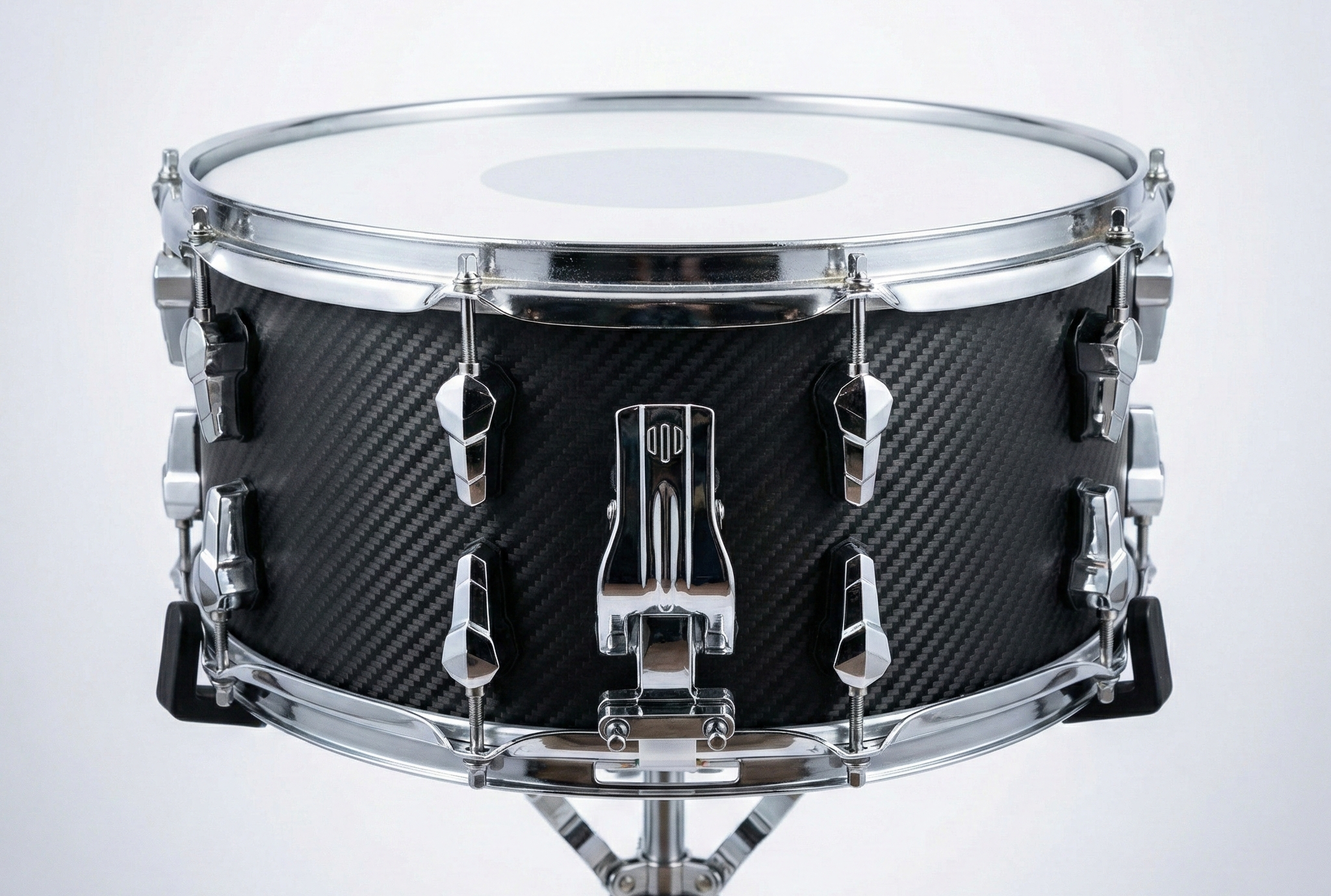
A deliberate choice
Carbon Fiber Series starts from a clear decision: not chasing wood. Wood represents tradition and lutherie culture, but it is not our playing field.
AluVibe comes from engineering, advanced prototyping and structural materials, with a strong automotive background where carbon fiber is a functional performance tool, not an aesthetic exercise.
The core question is simple: what happens when automotive engineering criteria are applied to a percussion shell?
Why carbon fiber
Carbon fiber is an anisotropic material with extremely high stiffness and low mass, offering predictable mechanical behavior.
In automotive applications it is used for chassis and monocoques for three key reasons: high rigidity, low weight and long-term stability.
Transferred to percussion instruments, these properties enable a focused response and reduced parasitic vibrations.
Environmental stability
Unlike traditional materials, carbon fiber is not affected by humidity or temperature variations.
This means stable tuning, consistent sound in any environment and absolute reliability in studio, live and touring situations. The shell does not move. The sound stays where you set it.
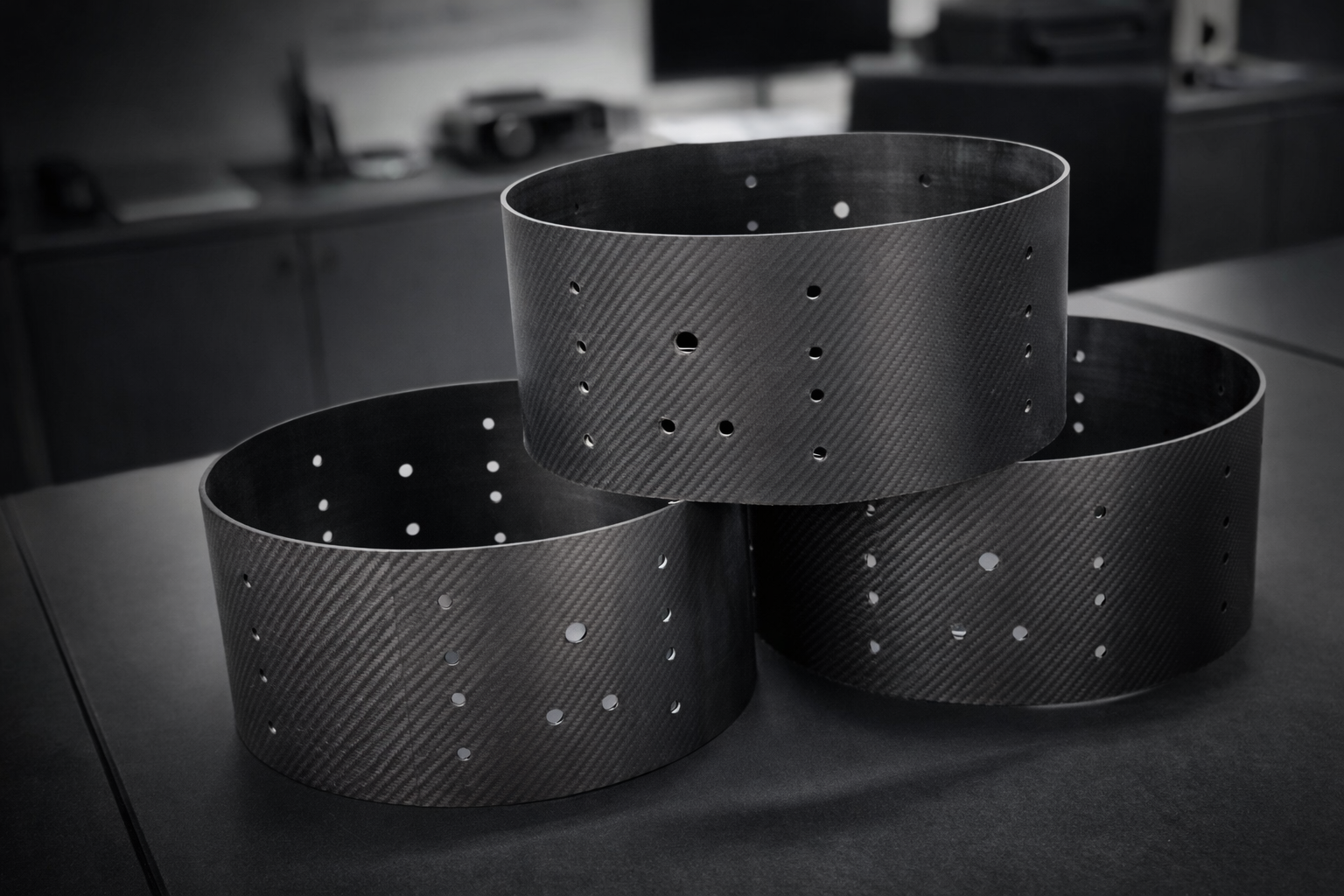
Manufacturing and laser cutting
Carbon fiber shells are finished using high-precision laser cutting, defining geometry and tolerances with automotive-grade accuracy.
This process preserves structural integrity while ensuring repeatability and dimensional consistency.